

7 Warning Signs Your Septic System Is Failing
A failing septic system almost always warns you first, if you know what to look for. Here are the seven signs every homeowner should never ignore, ranked from subtle to serious.
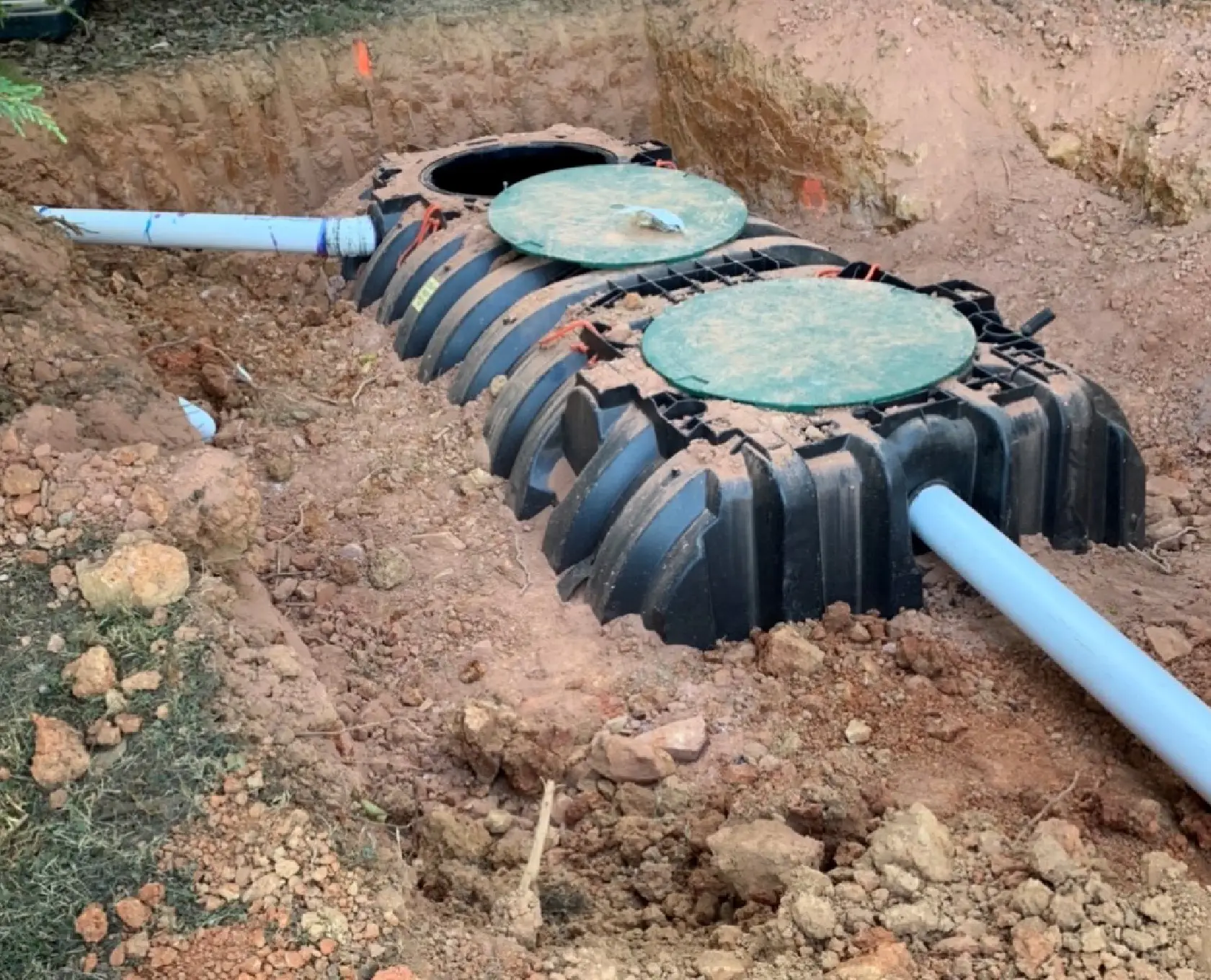
Septic systems are patient. They rarely fail all at once. Instead they send up a series of warnings, each one louder than the last, hoping someone notices before sewage ends up where it shouldn’t. Most of the emergency calls we run could have been a simple, affordable fix if the homeowner had caught the early signs.
Quick answer
The seven signs of a failing septic system, from subtle to serious: slow drains, gurgling pipes, sewage odors, soggy or extra-green grass over the drain field, standing water near the tank, sewage backups, and high nitrate levels in well water. The earlier you catch them, the cheaper the fix. Slow drains and odors are fixable for a few hundred dollars; a backup you ignored can mean a drain field replacement.
1. Drains that have gotten slow
Every drain in the house emptying slower than it used to, not one clogged sink but the whole system dragging, is often the first sign the tank is full or the field isn’t accepting water. A single slow drain is a plumbing clog. Slow drains everywhere point to the septic system.
2. Gurgling in the pipes
If your toilet burps or your drains gurgle when water goes down, air is struggling to move through a system that’s backing up. It’s a subtle sign that’s easy to dismiss, and an early one worth acting on.
3. Sewage odors inside or out
You should never smell your septic system. A sewage or “rotten egg” smell near drains inside, or over the tank and drain field outside, means gas is escaping where it shouldn’t. That points to a full tank, a venting problem, or waste surfacing in the yard.
4. Lush, soggy grass over the drain field
Here’s a sneaky one: the greenest, spongiest patch of your lawn is a warning, not a blessing. When a drain field starts to fail, partially treated wastewater rises toward the surface and fertilizes the grass above it. If one strip of yard is thriving while the rest is normal, your field may be pushing water up instead of down.
5. Standing water or wet spots near the tank
Pooling water or persistently muddy ground around the tank or field, with no rain to explain it, means liquid is escaping the system. This is the stage right before surfacing sewage, and it needs a professional look right away.
6. Sewage backing up into the house
This is the sign no one misses, and the one no one should ever reach. Sewage coming up through the lowest drains or toilets means the system has nowhere left to send waste. Stop using water immediately and call for emergency service. A backup is a health hazard, not a “deal with it Monday” problem.
7. Nitrates in your well water
If you’re on a well, a failing septic system can contaminate your drinking water. A spike in nitrate or bacteria levels on a water test can trace back to a septic field that’s no longer treating waste properly. It’s the most serious sign because it affects your health directly.
What to do when you spot a sign
The order of operations is simple:
- If sewage is backing up, stop running water and call right away. This is an emergency.
- For slower signs like slow drains, odors, and soggy spots, book a septic inspection before it escalates. Most of these trace to a full tank or a fixable component.
- Don’t wait and see. Septic problems never improve on their own.
The reason we push so hard on catching these early is money. A septic repair caught at the “slow drain” stage is often a few hundred dollars. The same system ignored until the drain field fails can cost thousands to replace. Early beats cheap every time.
Seeing any of these signs on your property? Contact True Septic and we’ll diagnose the real cause, fast, before a small problem becomes a big one.